Invitation
Download as .rtf file
Download brochure as .pdf file
Programme
PAST CONGRESSES
Additional Information
Quick Facts about Denmark
Denmark: Constitutional kingdom
Area: 43.094 sq km
Coastline: 7.300 km
Population: 5.4 million
Religion: Lutheran Protestants
Language: Danish
Capital: Copenhagen
Currency: Danish Krone (DKK): 1 Euro = 7.45 DKK ; £1 = 8.34DKK (as at 9 Jan 2009)
Quick Facts about Danish Weather in October
Average temperature: 10 C
Temperature range: 5-15 C (night-day)
Average rain/month: 76 mm
Average rainy days/month: 11
Average sunshine hours/month: 87
How to get to Esbjerg
By air: Closest airport is Billund (1 hour drive from Esbjerg). Billund is connected to airports in Copenhagen, Oslo, Stockholm, Amsterdam, Brussels, Paris and London. From Billund there are frequent buses and taxis for Esbjerg.
By rail: Connections from Copenhagen to Esbjerg every second hour (direct train from Copenhagen Airport to Esbjerg). From Fredericia, which is connected to Hamburg, there are trains for Esbjerg every hour.
By ferry: There are ferry lines to Esbjerg from Harwich in the UK and from Torshavn on the Faroe Islands.
By road: Esbjerg is connected to E 20 and E 45 by highway.
Ferry to Harwich
Hotels in Esbjerg
Esbjerg offers a variety of good hotels. The organizers have booked a number of hotel rooms at absolutely reasonable prices for your convenience on the following hotels:
Palads Hotel, Skolegade 14, 6700 Esbjerg – 50 rooms – 545/705 DKK (approx. 74/95 euro) for single/double room
Hotel Ansgar, Skolegade 36, 6700 Esbjerg – 10 rooms – 745/950 DKK (approx. 100/128 euro) for single/double room
Scandic/Olympic, Strandbygade 3, 6700 Esbjerg – 40 rooms – 985/1135 DKK (approx. 133/153 euro) for single/double room
Hotel Britannia, Torvegade 24, 6700 Esbjerg – 50 rooms – 985/1135 DKK (approx 133/153 euro) for single/double room
To get these preferential rates please book your hotel rooms via the ICMM Esbjerg 2009 Internet Registration or the ICMM Esbjerg 2009 Fax Registration Form only.
Online registration is expected to be up and running by Mid February 2009.
The Performing Arts Centre (Musikhuset Esbjerg)
The Performing Arts Centre is the main venue of the ICMM Esbjerg 2009 Congress. The remarkable building - designed by the well-known Danish architect Jørn Utzon and his son Jan – was opened in 1996. The Performing Arts Centre is situated about 200 m from the Central Town Square and within 2 minutes walk from the hotels booked by ICMM. From the Performing Arts Centre you will get a good view of the Port of Esbjerg and the island of Fanø. You can learn more about the Performing Arts Centre at the website www.mhe.dk.
The Fisheries and Maritime Museum in Esbjerg
In 2008, the co-host of the ICMM Esbjerg 2009 Congress, the Fisheries and Maritime Museum in Esbjerg celebrated the 40th Anniversary of the official opening of the museum in 1968.
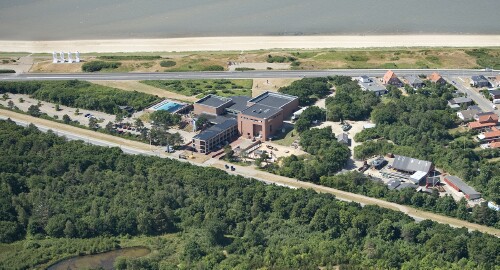
Originally the museum’s working fiel d was focused on Danish fishery but over the years the Fisheries and Maritime Museum has redefined its activities and widened the museum’s concept under the headline “Man and the Sea”. Today the Fisheries and Maritime Museum deals with almost all aspects of maritime and marine life and the relations between man and sea. The museum’s research is carried out by the Centre of Maritime and Regional Studies which is a 50-50 joint venture between the Fisheries and Maritime Museum and the University of Southern Denmark. Results of the research are presented in the some 14.000 sq m of exhibition that the Fisheries and Maritime Museum has to offer to the visitors of the museum. Since the opening in 1968 around 6.5 million visitors have passed the entrance to the Fisheries and Maritime Museum in Esbjerg. For further information please check the website www.fimus.dk.
Maritime Denmark
Denmark consists of the Jutland peninsula and 406 islands with a combined coastline of almost 7.300 km. The North Sea along the Jutland west coast constitutes the westward border of Denmark. Most of the Danish islands are situated in Kattegat – the sea between the east coast of Jutland and the west coast of Sweden. The Danish islands divide the Kattegat and the Baltic.
Thus Denmark – an independent kingdom since the 10th Century and one of the oldest states in Europe – takes a central position on the sailing routes between the Baltic and the North Sea as well as between the Nordic countries and Central Europe. All through the history of Denmark, the important maritime location of the country has influenced the conditions for Danish trade, business, politics and military strategy. Traces of the maritime history of the Danes can be found all along the Danish shores and a good place to start your search is in the area around Esbjerg.
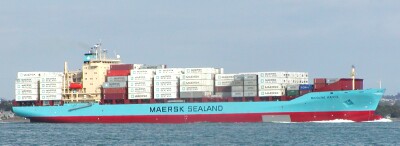
Nicoline Maersk
From Viking to ‘Roughneck’– the Maritime History of the Esbjerg Area
Within a relatively small geographic area around Esbjerg you will find the traces of a constant maritime development through 50 generations. Indeed this part of Denmark offers you an insight into the history of the Danes from Vikings to ‘Roughnecks.’
The city of Ribe - some 30 km south of Esbjerg - is the oldest city in Scandinavia. Ribe was founded as a trading place as early as 710AD. Soon the trading place developed into a city and during the Viking Age the city of Ribe was in fierce competition with Haitabu on the east coast of Schleswig over the cross trade from the North Sea to the Baltic.
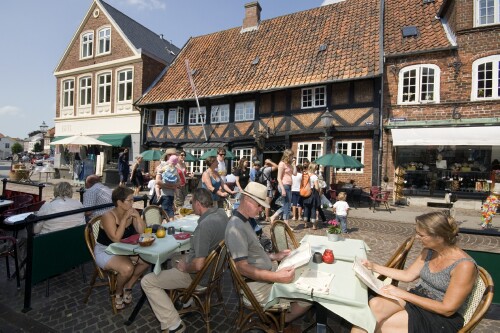
(above and below - Ribe)
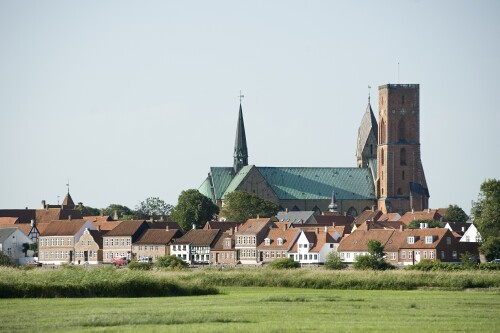
When Lübeck took over the trade from Haitabu, Ribe flourished and held a position among the most important Danish cities until the 17th Century. The reason for Ribe’s final fall was a combination of changes in the major sailing routes around the Skaw and into the Baltic and the fact that the Danish king gave priority to Copenhagen on the island of Sealand. Today the large cathedral and a huge number of old houses remind visitors of the time when Ribe played a dominant role as the Danish gateway to the west.
When the decline and fall of Ribe weakened the city, maritime activities in the Danish part of the Waddensea were taken over by people on the Waddensea islands and in Hjerting a little north of present-day Esbjerg. However, only the population of the island of Fanø – just 2 km off Esbjerg - proved able to build up a significant local fleet.
Until the 18th Century the people of Fanø had primarily been active as fishermen but from around the 1740s the Fanø skippers started to build up a merchant fleet which in the 19th Century became one of the largest in the Danish Kingdom. Especially in the last decades of the 19th Century, sailing vessels from Fanø took up deep sea sailing and showed the flag all over the world. In the long run, however, the sailing vessels of Fanø proved unable to compete with the growing number of still more efficient steam ships. In the first decade of the 20th Century the Fanø fleet sailed into twilight. Today the well preserved skipper hamlets of Fanø – Sønderho and Nordby - still give you an idea of what the island was like when almost every man on Fanø earned his living in the local shipyards or on board the proud vessels of the Fanø fleet.
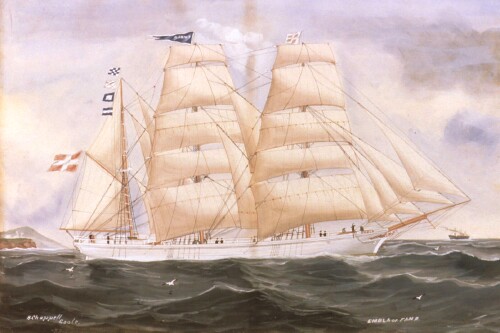
The Port of Esbjerg was founded in 1868 as a substitute for the westward harbours that the Danish Monarchy lost in Schleswig-Holstein as a result of the defeat in the war against Prussia and Austria in 1864. The location of the new harbour was chosen because of the deep estuary, Grådyb, that led to Esbjerg from the North Sea. At the time of the foundation only a few people lived in the area but along with the harbour came the city of Esbjerg. Esbjerg is the youngest city in Denmark with a recent population of some 80,000 inhabitants.
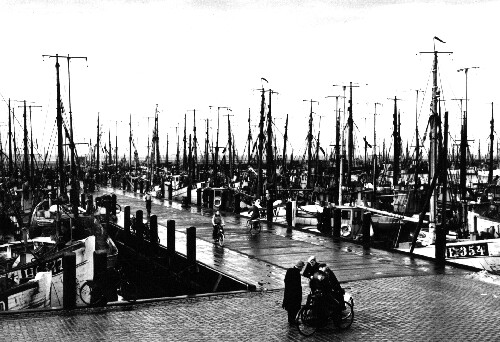
The citizens of Esbjerg have always lived by and of the harbour. In the beginning, agricultural goods were exported to the UK and in return for goods like coal, fertilizers and timber. Today shipping is still a major activity at Esbjerg Harbour which is one of the largest ports in Denmark. From around World War I, fisheries became a still more dominant activity at Esbjerg Harbour.
By the end of the 1960s, Esbjerg was the home port of more than 600 fishing vessels and a significant related industry which all together accounted for some 8-9,000 jobs. Since then the restructuring of the fisheries from a fleet of many small vessels to few large ones, the introduction of quotas, and other challenges for the industry have reduced the fishing fleet of Esbjerg to a mere 30 vessels. Fortunately for Esbjerg, the harbour in the 1960s was chosen as base port of the offshore oil and gas activities in the Danish part of the North Sea. Over the last three decades, the offshore industry has grown into a major business for Esbjerg. Today some 250 offshore related companies in Esbjerg account for about the same employment and a much larger turnover than the fisheries sector did at its peak.
Nature around Esbjerg
Esbjerg is situated at the northern part of the international Waddensea – a huge tidal area that stretches 900 km along the west coasts of Denmark, Germany and the Netherlands. Deep estuaries carve their way between the small islands in the Waddensea and allow access to the local harbours directly from the North Sea. The flat horizon and high skies combined with the tidal water, sand banks, and fantastic wildlife, too, make the Waddensea area a very special region to explore.
From Esbjerg all the way south to Den Helder in the Netherlands you will find the dikes that have been built since medieval times to protect the flat countryside against spring floods. North of Esbjerg you will find the Ho Bay area with large woodlands and at Blaavand – some 30 km from Esbjerg - you are on a typical North Sea coast with large dunes and broad, sandy beaches. From Blaavand – the westernmost point in Denmark – you will have a view of the Horns Rev, a much feared reef in the age of sail, but today in use as the worlds’s largest offshore wind mill park.
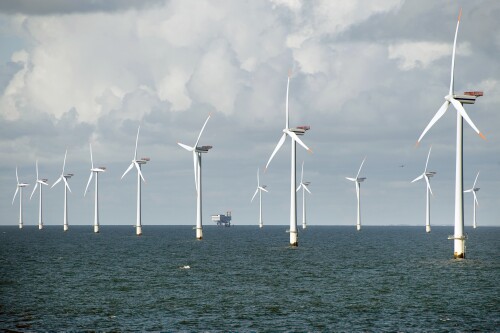
The world's largest wind mill park at Blaavand
ICMM 2009 in Esbjerg – Tours arranged for accompanying partners
6 October 2009: Guided city walk and shopping in Esbjerg
10.00 Start at the Performing Arts Centre (Musikhuset Esbjerg)
designed by Jan and Jørn Utzon. The Performing Arts Centre
also houses the Esbjerg Art Museum with a fine collection of
modern art.
Afterwards we pass the town square and continue on to
the Esbjerg Museum/Westjutland Amber Museum where we see
the unique amber exhibition.
After having visited the museum the guide will take you on a walk
round the only town in Denmark that sprouted up during the
industrialism. With its unique town plan and architecture from the
1890s until to day the town has grown from a few tiny cottages
into Westjutland’s biggest city.
13.00 Lunch at Sand’s Restaurant – Esbjerg’s oldest restaurant also housing
a gallery.
7 October 2009: Blaavand - Denmark’s westernmost point
10.00 Departure from Hotel Britannia
A short stop at the monumental sculpture ”Man Meets the Sea”, the
landmark of Esbjerg
We now continue along the Ho Bay through Hjerting and the natural park of
Marbæk. Through large, extensive moorlands with a beautiful coastal scenery
to Blaavand. Here you can take a walk along the beach or climb to the top of
The lighthouse at Blaavandshuk to enjoy the outstanding view of the fascinating
dune landscape and the roaring North Sea. From here the Horns Rev offshore
wind farm can bee seen.
12.30 Lunch at Blaavand Kro
Shopping in Blaavand
14.00 Departure from Blaavand
14.30 Visit to Aal Church dating back to the first half of the 12th century.
Aal Church is well-known far and wide because of its frescoes which probably
are as old as the oldest part of the church.
15.00 Departure from Aal Church and back to Esbjerg.
15.30 Arrival in Esbjerg
8 October 2009: The island of Fanø – a visit to the 19th Century
09.00 Departure from Hotel Britannia
09.30 Nordby, Fanø
10.15 Along the beach to the small skipper hamlet Sønderho, which is the most well preserved 19th century city in Denmark.
10.35 Sønderho, Fanø
11.30 Departure from Sønderho
12.30 Arrival in Esbjerg
9 October 2009: On your own
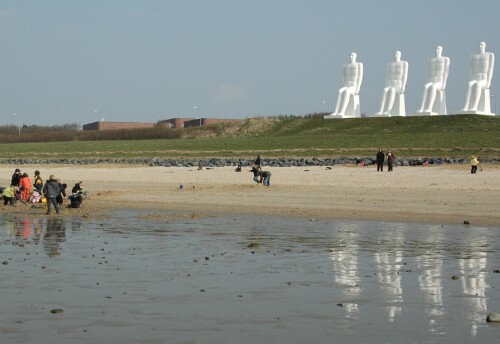 the monumental sculpture ”Man Meets the Sea”, the landmark of Esbjerg the monumental sculpture ”Man Meets the Sea”, the landmark of Esbjerg
ICMM Esbjerg 2009 – Post Conference Tour
Schleswig-Holstein – Links between the North Sea & the Baltic 700-2000
10 October 2009: Ribe & Haitabu
09.00 Departure from Hotel Britannia
09.40 Arrival Ribe – the oldest town of Scandinavia, founded 710
09.45 The ”Ribes Vikinger” Museum
10.45 The cathedral of Ribe – an 12th century Danish Cathedral
11.15 Walk through the streets of Ribe
12.00 Lunch in Cafe Kolvig in Ribe
13.00 Departure from Ribe
15.00 Arrival Haitabu – the remains of a Danish city from the 8th Century
15.10 The ”Haitabu” Museum
16.10 A walk to the remains of the old Haitabu and the Dannevirke
17.00 Departure from Haitabu
17.20 Arrival at Hotel Waldschlösschen in the city of Sleswig
19.00 Dinner at the hotel
11 October 2009: Hamburg
09.00 Departure from Hotel Waldschlösschen
10.30 Arrival in Hamburg
10.45 The ”Internationales Maritimes Museum Hamburg”
12.15 Lunch at the museum
13.00 Guided Harbour Tour in the Port of Hamburg
15.00 Arrival at the “Hafenmuseum Hamburg” – guided tour
16.00 Departure to Billund Airport and Esbjerg
20.00 Arrival at Billund Airport
21.00 Arrival Esbjerg
Please note:
The official Post Conference Tour covered by the announced prices ends at Hafenmuseum Hamburg. Delegates going back to Billund Airport and Esbjerg will of course have a free bus ride back.
Delegates who want to stay in Hamburg will have to get accommodation themselves. Hafenmuseum Hamburg has made an option for hotel rooms on board the mv Cap San Diego and will take care of transportation from the museum to the ship (see details below).
For the evening, Hafenmuseum Hamburg offers an optional programme for delegates staying in Hamburg after the official end of the Post Conference Tour:
16.50 Departure to mv Cap San Diego by boat – 8 euro/person
17.20 Arrival at Cap San Diego
17.30 Check-In for hotel guests staying at the Cap San Diego
18.00 Guided Tour on board Cap San Diego
19.30 Dinner on board Cap San Diego – www.capsandiego.de
Or on board Rickmer Rickmers – www.rickmer-rickmers.dk
Or on board the Feuerschiff – www.das-feuerschiff.de
Cabins on board the Cap San Diego (maximum capacity 18 persons):
Double (2 separate beds) 90 Euros
Single 72 Euros
Single with extra bed 86 Euros
Captains Suite (2 pers.) 125 Euros
Link to currency converter (opens in new window)
If you want to make use of the offer from Hafenmuseum Hamburg, please contact Ms. Ursula Wöst at Hafenmuseum Hamburg asap:
phone: +49 40 75 11 469 10
email: [email protected]
PLEASE NOTE THAT THE OPTIONAL EXTRA STAY IN HAMBURG CAN ONLY BE BOOKED VIA HAFENMUSEUM HAMBURG – NOT VIA THE OFFICIAL REGISTRATION FOR ICMM ESBJERG 2009.
Invitation
Download as .rtf file
Download brochure as .pdf file
Programme
PAST CONGRESSES
BACK
TO TOP
|